In this guide
- What are the four types of book editing?
- What is developmental editing?
- What is line editing?
- What is copy editing?
- What is proofreading?
- Which type of book editing do you need?
- How do you choose a book editor?
- Can you edit your own book?
- What should you prepare before editing starts?
- How do the editing stages fit your publishing timeline?
- How do editors mark up a manuscript?
- How should you respond to editorial feedback?
- How many rounds of book editing does a manuscript need?
- What does book editing not include?
This guide explains each type of book editing in plain English, what you get from it and when it makes sense. If you already know what you need, our editing and proofreading team offers a free consultation for authors anywhere in the U.S.
What are the four types of book editing?
The four types of book editing are developmental editing, line editing, copy editing and proofreading. They move from big picture to small detail. Developmental editing looks at structure and story, line editing at style, copy editing at correctness and consistency, and proofreading at the final printed or digital pages.
| Type | Main focus | When it happens |
|---|---|---|
| Developmental editing | Structure, plot, argument, pacing | After a complete draft |
| Line editing | Voice, flow, clarity of each sentence | After the structure is settled |
| Copy editing | Grammar, spelling, consistency, style rules | Before design and layout |
| Proofreading | Typos and layout errors in final pages | After formatting, before publishing |
What is developmental editing?
Developmental editing is a big-picture review of your whole manuscript. The editor checks whether the structure works, whether the story or argument holds together and whether the book delivers what its readers expect. You usually receive an editorial letter plus comments in the manuscript, then you do the rewriting yourself.
A developmental editor asks questions like these:
- Does the opening hook the right reader quickly?
- Are there chapters that repeat, drag or belong somewhere else?
- In fiction, do the characters want something clear, and does the plot test them?
- In nonfiction, does each chapter support the main promise of the book?
This is the most valuable edit for first-time authors, because fixing structure later is expensive. There is little point polishing sentences in a chapter you may cut.
What is line editing?
Line editing works through the manuscript sentence by sentence to improve style, rhythm and clarity while keeping your voice. A line editor tightens wordy passages, smooths awkward transitions, varies sentence length and flags clichés or repeated words. It is about how your writing reads, not just whether it is correct.
Line editing suits authors whose structure is solid but whose prose feels flat or uneven. Many editors combine line editing and copy editing into one pass, so ask exactly what a quote includes.
What is copy editing?
Copy editing checks a manuscript for correctness and consistency. The copy editor fixes grammar, spelling, punctuation and word usage, and keeps details consistent, such as names, dates, hyphenation and capitalization. Most U.S. book editors follow The Chicago Manual of Style and build a style sheet for your book.
A good copy editor also notices factual slips, such as a character whose eye color changes or a date that does not fit the timeline. The style sheet is useful later, because your proofreader and any future editions can follow the same choices.
What is proofreading?
Proofreading is the final quality check on your formatted book, after design and layout. The proofreader catches remaining typos plus layout problems that only appear on finished pages, such as bad line breaks, missing page numbers, widows and orphans, and headers that do not match chapters. It is a safety net, not a substitute for editing.
If you skip copy editing and send a rough manuscript straight to a proofreader, you will get a long list of changes at the most expensive stage to make them.
Which type of book editing do you need?
Most authors need more than one type of book editing, in order. A first novel or a new nonfiction book usually benefits from developmental editing, then a combined line and copy edit, then proofreading. A manuscript that has already been through critique partners or beta readers may only need copy editing and proofreading.
Use these quick rules:
- Readers are confused or bored: start with developmental editing.
- The story works but the writing feels clunky: choose line editing.
- The writing is strong but has errors: choose copy editing.
- The book is designed and almost ready: choose proofreading.
Editing is usually one of the biggest lines in a self-publishing budget. Our self-publishing cost breakdown shows how editing fits next to cover design, formatting and ISBNs.
How do you choose a book editor?
Choose a book editor who works in your genre, explains exactly which type of editing a quote covers and offers a short sample edit. Ask for a written scope with deadlines and the number of passes. A reputable editor never asks for rights to your book, and you keep full ownership of the edited files.
The Alliance of Independent Authors publishes a code of standards for author services that is a helpful checklist. Red flags include vague promises, pressure to buy a big package before anyone has read your pages and no clear revision policy.
Can you edit your own book?
You can and should self-edit before hiring anyone, but it rarely replaces professional book editing. Authors read what they meant to write, not what is on the page. A careful self-edit, followed by beta readers, makes professional editing faster and more focused, because the editor spends time on real problems instead of obvious ones.
Good self-editing habits include reading the manuscript aloud, printing it out, cutting filler words and letting it rest for a few weeks before you revise. If you are still at the drafting stage and want help writing the book itself, see our guide on how to hire a ghostwriter or our book writing services.
What should you prepare before editing starts?
Prepare a complete draft, a short summary of the book, a note about your target reader and any questions or worries you already have. Send the file in a standard format such as Word, with simple formatting. The cleaner and more complete the file, the more of the editor’s time goes into real improvements.
It also helps to tell your editor what kind of feedback you want. Some authors prefer direct, detailed notes, while others want a gentler overview first. Share any style choices you have made on purpose, such as a regional dialect, unusual punctuation in dialogue or a preferred spelling of invented names, so they are not “corrected” by mistake.
Finally, plan time to respond. After a developmental edit, revisions can take weeks. After a copy edit, you will review tracked changes and answer queries. Building that time into your schedule keeps your publishing date realistic and avoids a rushed final stage.
How do the editing stages fit your publishing timeline?
The stages fit your timeline in sequence: revise after developmental feedback, then line and copy edit the stable draft, then design the interior, then proofread the formatted pages. Overlapping them usually costs more, because changes made late force the earlier work to be repeated.
A simple way to plan is to work backward from your release date. Leave time for proof copies and corrections at the end, then the proofread, then formatting, then the copy edit, and so on. If the dates do not fit, move the release date rather than skipping a stage.
How do editors mark up a manuscript?
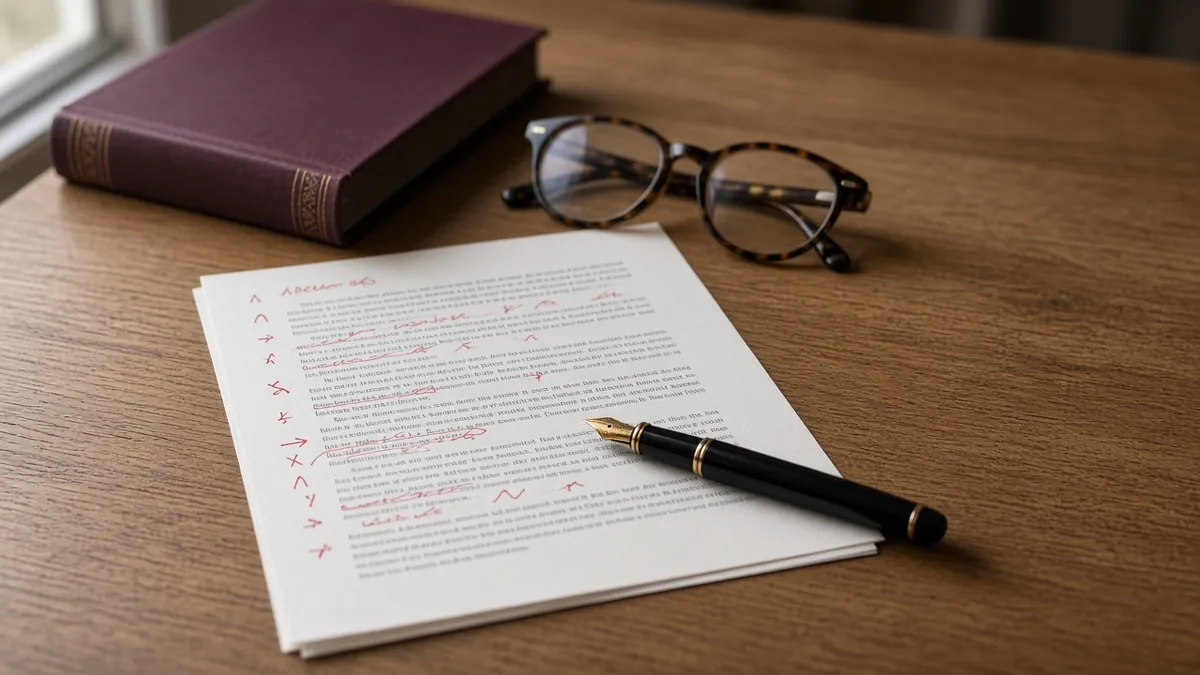
Most book editing today happens in Microsoft Word with Track Changes turned on. Every deletion, insertion and moved sentence shows up in color, so you can accept or reject each change one at a time. Comments in the margin explain the reasoning behind bigger suggestions, or ask you a question only you can answer, such as what a character meant or whether a date is correct.
Developmental editors often add an editorial letter as well. This is a separate document, usually several pages long, that walks through the big picture: structure, pacing, character arcs, argument or point of view. Read the letter first, then the margin notes. It is easier to make sense of the details once you understand the overall diagnosis.
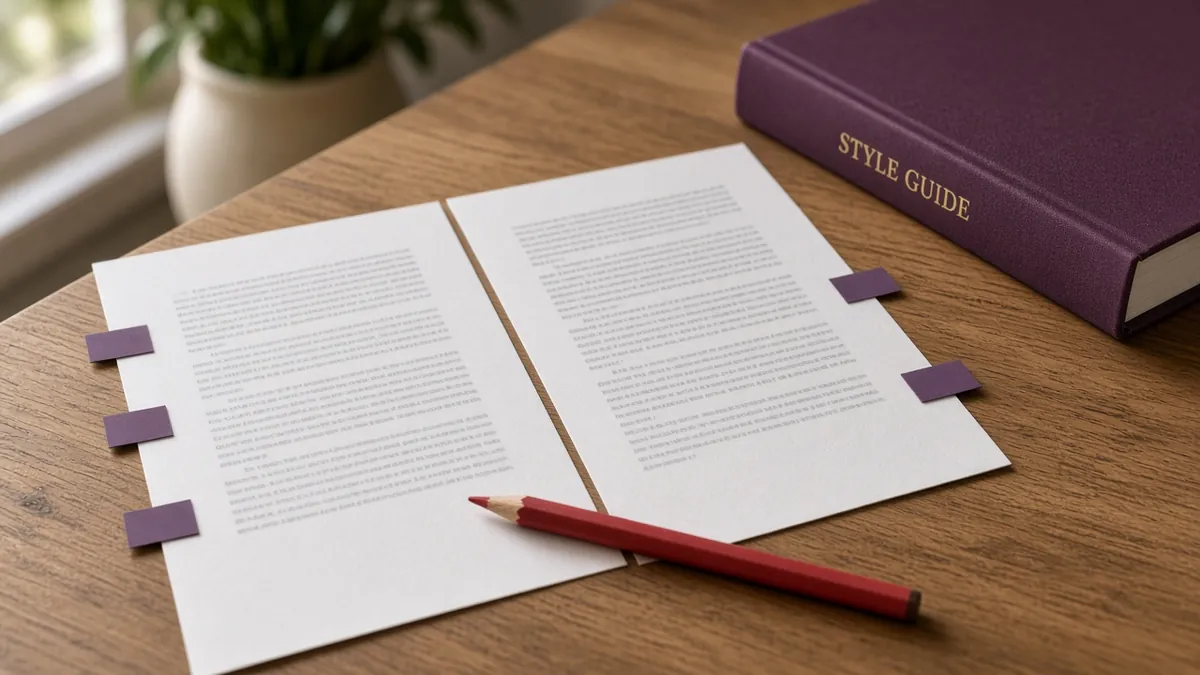
Copy editors usually build a style sheet while they work. It records your choices on spelling, capitalization, hyphenation, numbers and character names, so the same rules apply on page 12 and page 312. Keep this sheet. Your proofreader, your cover copywriter and any future editor on a sequel can all use it.
How should you respond to editorial feedback?
Good book editing is a conversation, not a set of orders. A few habits make the process smoother:
- Give yourself a day before reacting. Detailed feedback can feel personal at first. A night’s sleep usually makes it easier to see which notes will help.
- Look for patterns. If an editor flags the same issue in many places, fixing the cause is better than patching each instance.
- You keep the final say. It is your book. If you disagree with a change, reject it, and leave a short note so the editor understands why.
- Ask questions. If a comment is unclear, ask what the editor had in mind. Most are happy to explain.
- Finish one round before starting the next. Sending a copy editor a manuscript you are still restructuring wastes their time and your budget.
How many rounds of book editing does a manuscript need?
There is no fixed number. A first novel with structural problems may need a developmental edit, a full revision by the author, and then a second look before it is ready for line and copy editing. A polished nonfiction manuscript from an experienced writer might go straight to copy editing and proofreading.
What matters is the order. Work from big to small: structure first, then sentences, then consistency and correctness, then a final proofread of the formatted pages. Each stage assumes the one before it is finished. Skipping ahead usually means paying twice, because changes made late in the process introduce new errors that someone then has to catch.
When you request quotes (the Editorial Freelancers Association publishes typical editorial rates), ask each editor how many passes their price includes and whether a short follow-up review after your revisions is part of the service. Clear expectations up front protect both of you.
What does book editing not include?
Editors improve the book you wrote. They do not usually rewrite whole chapters, research facts from scratch, check legal risks or design your pages. If you need someone to draft large sections, that is ghostwriting or co-writing, which is a different service with a different agreement. If your book makes claims about real people or uses quoted material, ask a qualified attorney about permissions and defamation risk, since that falls outside editorial work. Layout and typesetting come after editing, and proofreading happens on those finished pages.